We all have coping skills because we all have to cope with things we don't like. The real question is whether our coping skills are constructive or destructive. If I start throwing punches at someone when I'm frustrated with them, then I'm using a destructive coping skill. That's exactly the kind of coping skill that comes most naturally. When X is frustrating, we can cope by lashing out at X. The next step is to recognize when lashing out at X will backfire. So when I'm frustrated with the 6'8" body builder at the end of the bar, I might choose to lash out at the drunk pipsqueak nearby instead. Most of us have caught on to the idea that this kind of coping is frowned upon and might get us thrown in the clink even if we win the fight. We either learn to do it in a sneaky way ("I'll show that guy, I'll key his car when no one is looking!") or we find some other outlet for our frustrated energy. The latter is where you're going to find the constructive coping skills (as well as plenty of other destructive ones).
One of the first steps to helping kids work through anger is to help them identify and rely on constructive coping skills. Help them to find things they like or things that relax them. For example, maybe a child who enjoys snuggling with something soft and warm could benefit from having a stuffed animal (stuffy? doll? plush toy? Different families call them different things...) Either way, the first trick to helping kids work through their anger is to support them in the development of good coping skills. Lots of people use food for coping - that's why we talk about comfort food - but, while better than punching someone in the face, it's probably not the healthiest way of defusing anger. The same goes for any kind of approach that can harm oneself. The fact is that different people will get help from different things. One person needs to talk it through while another needs to cool off alone. One person will want to rearrange furniture and another will want to listen to music. As parents, our role is to help our children figure out what works for them and then let them do it.
This may be easier said than done. Sometimes a 5 year old isn't going to be able to walk away from the source of their anger to go color a picture. Parents and teachers often frown on letting children walk away when they are the source of the child's anger. I know my daughter gets plenty mad at me sometimes when I correct her homework, but that doesn't mean she gets to just go outside and ride her bike instead of trying those math problems again. That's why you'll want to find a variety of coping skills that can be used in a variety of situations.
Another thing you'll want to be aware of is that when children (or anyone, for that matter) is learning a new skill, they'll need more reminders and support than usual, but that eventually (after a good long while and a lot of supported practice) they'll get to the point where they can calm themselves just by knowing that their coloring book, or stuffed animal, or sandwich hug from mommy and daddy will be there later.
So what are some coping skills that work for you and your family?
Showing posts with label parenting. Show all posts
Showing posts with label parenting. Show all posts
Tuesday, March 27, 2012


Sunday, March 18, 2012
Helping Kids Through Anger
I had the opportunity to attend a conference on fathering last week. It was a great experience - I learned a lot of useful stuff. While I was there I bought a book called, "131 Creative Strategies for Reaching Children with Anger Problems" by Tom Carr.
In the book, the author describes 2 types of anger. The first is Bear anger. I think when most people think of anger they imagine the Bear. Bear anger is loud and menacing. No one sees Bear-style anger without being aware of it. Tantrums, yelling, hitting, door-slamming, and throwing things are all types of Bearish anger.
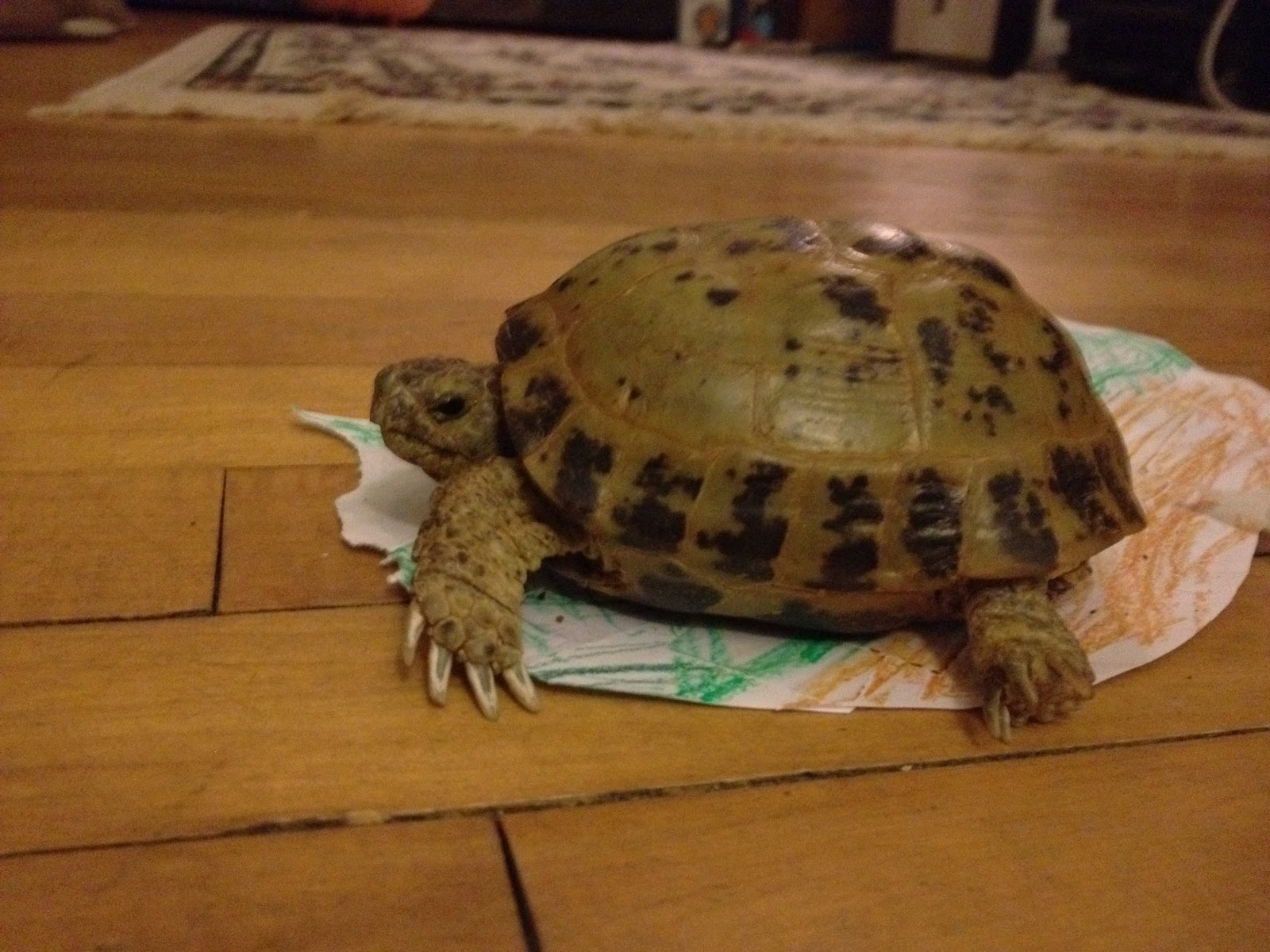
The second type of anger is Turtle style anger. A turtle pulls its head into its shell and imagines the world has disappeared when it's angry. I think it's easy to miss Turtle type anger. Locking oneself away, monosyllabic responses, self-recrimination, and avoidance are all signs of Turtle anger.
In our family, my daughter is the Bear and my son is the Turtle. Guess who's gotten more attention. Although Turtle anger is easier to deal with in the short term, it may be more difficult to work with in the longer term - if only because it's so easy to leave it unaddressed for so long. When a child is angry and starts hitting and screaming, parents are quick to drop what they're doing and try to fix the problem. Perhaps they talk to the child about coping skills or something. But when a child withdraws and gets quiet, adults don't tend to take as much notice.
Over the next few weeks, I'm going to post about the anger kids feel and how to identify it, find its roots, and address it.
In the book, the author describes 2 types of anger. The first is Bear anger. I think when most people think of anger they imagine the Bear. Bear anger is loud and menacing. No one sees Bear-style anger without being aware of it. Tantrums, yelling, hitting, door-slamming, and throwing things are all types of Bearish anger.
The second type of anger is Turtle style anger. A turtle pulls its head into its shell and imagines the world has disappeared when it's angry. I think it's easy to miss Turtle type anger. Locking oneself away, monosyllabic responses, self-recrimination, and avoidance are all signs of Turtle anger.
In our family, my daughter is the Bear and my son is the Turtle. Guess who's gotten more attention. Although Turtle anger is easier to deal with in the short term, it may be more difficult to work with in the longer term - if only because it's so easy to leave it unaddressed for so long. When a child is angry and starts hitting and screaming, parents are quick to drop what they're doing and try to fix the problem. Perhaps they talk to the child about coping skills or something. But when a child withdraws and gets quiet, adults don't tend to take as much notice.
Over the next few weeks, I'm going to post about the anger kids feel and how to identify it, find its roots, and address it.
Sunday, March 4, 2012
Parenting Girls in a Sexist Society

My little girl just turned 8 years old! I can hardly believe it. The other night my wife, Ms. Skeptical, did something which I can only assume was meant to kill me. Out of the clear blue she turned to me and said, "You know, we should really think about when and how we're going to talk to her about puberty. I was talking to some people at work today about how it happens earlier now than it used to - probably related to better nutrition."
My first reaction after the initial horror and shock was that, although an intimidating prospect to consider, the task itself should be relatively straightforward. It should just be a matter of honesty, clarity, and a basic level of anatomy and physiology, right? Hell, Ms. Skeptical is both a female and a doctor, so she ought to be well qualified to explain how it all works.
And then I remembered the day's news. The Catholic bishops and a large contingent of other social conservatives were up in arms over the requirement that health insurance providers offer coverage for birth control. The rhetoric around this issue quickly shifted from political "dog whistle" sexist to overt sexist. A few days ago Rush Limbaugh made the news for calling a student who testified on behalf of the importance of birth control to women a slut and a prostitute whose parents should be ashamed that she had so much sex that she wanted to create a new welfare program just to pay for it all. Jesus H. Christ on a pogo stick. This is the shit our daughter - and everyone's daughters - are going to have to deal with. More to the point: this is the shit Ms. Skeptical and I have to prepare her for. Anatomy and physiology 101 won't cut it.
A couple more quick examples:
When Ms. Skeptical was in medical school a professor went on a little bit of a tirade about med students who complain about the hard work of their education. He said med school was a lot like rape in that it is really just a matter of perspective. He suggested that, like rape, if they just lay back and enjoy it rather than complaining then there's really nothing to worry about.
When our daughter was born I was the "stay-at-home-dad". We planned for Ms. Skeptical to pump at work, but we quickly learned that the support for this was more theoretical than actual. We had to switch completely over to formula after only a few months.
The point here is that I often forget just how much inequality there is for women. I bet this forgetfulness affects fathers more often than mothers, but I imagine that many mothers experience it from time to time as well. In school, we read about crusading heros like Elizabeth Cady Stanton, Susan B. Anthony, and Jeannette Rankin and, in celebrating the magnitude of their accomplishments, it's easy to imagine that the necessary changes have been made. The danger is that we might not raise our children, particularly our daughters, to remain vigilant against the dangers of a sexist, unjust society.
The conversation we'll be having with our newly minted 8 year old will be the first in a long line of conversations about what it means to be a woman in this particular time and place. Sometimes the challenge of parenting isn't knowing which choice to make - often the right choice if obvious, but the challenge is remembering to see that a choice needs to be made. Time marches inexorably forward and every day our daughters and sons will continue to soak in messages about things like gender roles and equality regardless of whether we've taken the time to remember to reinforce or counteract those messages. Once I'm prompted to consider these things, it becomes immediately clear that when raising a daughter I have to prepare her with a couple of skills.
She'll need a fighting spirit. This means that through my parenting I need to teach her that "fighting" will right wrongs. So, she needs to feel comfortable telling authority when she feels something is unjust and she needs to feel that if she makes a good enough case then those wrongs will be righted.
She'll also need a prepared awareness of the bigotry she's almost surely going to face due to her gender. One big injustice often starts with a thousand small ones. The Catholic bishops that started this whole birth control firestorm didn't just up and call women sluts. Instead, they talked about their religious rights. The student who testified before Congress didn't get to testify before the formal committee because they didn't invite any women to participate. These less blatant injustices were just as damaging, or even more damaging, than the more obviously offensive name calling on talk radio. I want my daughter to be prepared to notice prejudice long before it loses all the trappings of civility. It's that civil, "respectable" oppression that creates an unjust society.
So wish us luck as we proceed! And, removing the trappings of civility for a moment: fuck Rush Limbaugh. Seriously. Fuck that guy.
Sunday, February 26, 2012
Balancing Kids' Self-Esteem with High Expectations
My daughter (second-grader) has a 10 word spelling test every Friday at school. We found that we were battling her each week because she didn't want to study, so we came up with a plan. If she gets 8 out of the 10 words right then she can watch some TV over the weekend, if not, then she can't watch any TV until she can spell all 10 words. This has been really effective. Since we started this plan she's gotten at least 8 right every week and the fights over studying have stopped. Until yesterday, when she only got 7 right.
She was pretty upset about it. And I was heartbroken to hear her reaction. She's always been a kid who likes to be right and she takes it particularly hard when she makes mistakes. In this case, she spent a while crying and when I tried to reassure her she went full-on self doubt. When I told her all she needed to do was look over the words for a while and we'd give it a shot she said, "But I can't do it! I do everything wrong." Of course, those words break any parent's heart and they fill me with dread. I don't want my daughter to feel that way about herself or her abilities and I don't want her to be frozen by self doubt when difficulties arise. In the end, we had a good talk about all the things that she does right and we talked about how helpful it is to check the stories we tell ourselves. When we tell ourselves that we can't do it, we won't; but, if we tell ourselves that we can if we try, we will often succeed.
Some kids learn this lesson easily and others need more support and reminders. My wife and I have been working with our daughter on this and she's a little less hard on herself than she used to be, but it's a long process and a difficult balance: teaching a child to push themselves to do their best, but not judge themselves too harshly when things are challenging.
In the meantime, we're making an effort to be proactive when it comes to letting her know when she's done well. This is as simple as remembering to verbalize it when we notice that she's done something right or given a task her best effort. But we're tempering that by maintaining our expectations of her - 7/10 on the spelling test is still not enough. The way I see it, maintaining high expectations is a way of showing respect. Kids aren't dumb. They know when they're doing their best and when they're not. If my daughter's teacher asks her to learn 10 spelling words and she only learns a few, it's kind of insulting if I tell her she did well. It's like saying, "We didn't think you could do any better than that anyway." However, if I only pay attention when she falls short, she'll develop the idea that she's no good and that my expectations are impossibly high for someone so flawed.
Friday, February 10, 2012
A Book in the Mail
I'm expecting a book called, "Humanism for Parents: Parenting without religion" to arrive in the mail on or about February 14. I'm looking forward to reading it and reviewing it here.
Wednesday, February 8, 2012
Lonely Little Atheists
The event that prompted me to start this blog occurred about a week ago. My daughter attends a private, but not religious, elementary school. One day last week, when I picked her up from school, her teacher quietly took me aside and said, "Just giving you a heads up: we had a great conversation about evolution and creationism, or religion, so we're just letting parents know in case they want to talk more about it with the kids."
So in the car I asked about it - and was taken aback by my daughter's reaction. She went from happily telling me about a game at recess to shouting, "I don't know! I don't want to talk about it!" I backed off, but later, after she had calmed down a bit, I asked if we could talk about what upset her so much. She explained that she felt like she was the only one in the class that didn't believe in god and that she was afraid that some of her friends thought she was a bad person because of it. A bit of background: my daughter is 7 years old, she's very gentle, and she's wanted to be a paleontologist since she was 3. Knowing about the world is very important to her and it seems to have genuinely thrown her for a loop that someone could think that was a bad thing.
I'll leave for another day a discussion of how my wife and I resolved the issue with our daughter. Suffice to say that the event got my wife and I thinking about how, as children grow and become more engaged with the world outside of their own family, the ideals and values they learn from their parents will inevitably come into conflict with those of their peers. For humanists, this problem is magnified by virtue of the malice with which nontheistic people are held in American society. See articles like this for examples.
I've never fully bought into the New Atheism's disdain for religion. I tend to see religion more as a tool which, like a hammer, was created by and for humans and can be used to build a house or bash in someone's brains depending upon who wields it. For example, here in New Hampshire, where I live, the former Episcopalian bishop, Gene Robinson, has been an outspoken advocate for progressive, humanitarian causes. On the other hand, there's the Spanish Inquisition. Which, um...Yeah. Similarly, absence of religious belief doesn't indicate selflessness or selfishness either - there's plenty of stuff written about being good without god. Being a social worker, I've also found that some people really benefit from religious involvement - even if it's not my cup of tea.
So those are the things that have led me to tread lightly around the subject of religion in spite of the clear evidence that it's factually baseless. And by "tread lightly" I mean to say that I have tried not to rock the boat. The experience with my daughter challenged my hesitance to rock the boat because it awakened me to the fact that kids from nontheistic families are really going to need their parents to have respect for their own convictions. Without that, they may not learn to stand up for their own beliefs - or, worse, they may learn to become ashamed of their beliefs.
I'm still concerned about how to strike the balance between maintaining respect for other people's beliefs and maintaining respect for my own. The glib answer is that if they don't like it they can fuck off, but we humans are social creatures and the society we live in won't necessarily just change to suit us. On the other hand, if nontheists and humanists refuse to challenge society, how will it ever change? Atheists are perceived to be one of the least trustworthy groups in America, yet I hardly imagine that my wife and I are alone as "reputable, professional, family" types who also espouse secular humanist values while remaining quiet about those values in many circles. And for those of us with children, the last thing we want is to raise lonely little atheists who are too ashamed of being different to carve out a positive set of organizing principles for their own lives.
When it comes down to it, that's what this blog is about. I'd like to learn from others who have navigated this course and provide a forum for people who'd like to join me. So, is this an issue you have struggled with? And how have you resolved it - or have you?
So in the car I asked about it - and was taken aback by my daughter's reaction. She went from happily telling me about a game at recess to shouting, "I don't know! I don't want to talk about it!" I backed off, but later, after she had calmed down a bit, I asked if we could talk about what upset her so much. She explained that she felt like she was the only one in the class that didn't believe in god and that she was afraid that some of her friends thought she was a bad person because of it. A bit of background: my daughter is 7 years old, she's very gentle, and she's wanted to be a paleontologist since she was 3. Knowing about the world is very important to her and it seems to have genuinely thrown her for a loop that someone could think that was a bad thing.
I'll leave for another day a discussion of how my wife and I resolved the issue with our daughter. Suffice to say that the event got my wife and I thinking about how, as children grow and become more engaged with the world outside of their own family, the ideals and values they learn from their parents will inevitably come into conflict with those of their peers. For humanists, this problem is magnified by virtue of the malice with which nontheistic people are held in American society. See articles like this for examples.
I've never fully bought into the New Atheism's disdain for religion. I tend to see religion more as a tool which, like a hammer, was created by and for humans and can be used to build a house or bash in someone's brains depending upon who wields it. For example, here in New Hampshire, where I live, the former Episcopalian bishop, Gene Robinson, has been an outspoken advocate for progressive, humanitarian causes. On the other hand, there's the Spanish Inquisition. Which, um...Yeah. Similarly, absence of religious belief doesn't indicate selflessness or selfishness either - there's plenty of stuff written about being good without god. Being a social worker, I've also found that some people really benefit from religious involvement - even if it's not my cup of tea.
So those are the things that have led me to tread lightly around the subject of religion in spite of the clear evidence that it's factually baseless. And by "tread lightly" I mean to say that I have tried not to rock the boat. The experience with my daughter challenged my hesitance to rock the boat because it awakened me to the fact that kids from nontheistic families are really going to need their parents to have respect for their own convictions. Without that, they may not learn to stand up for their own beliefs - or, worse, they may learn to become ashamed of their beliefs.
I'm still concerned about how to strike the balance between maintaining respect for other people's beliefs and maintaining respect for my own. The glib answer is that if they don't like it they can fuck off, but we humans are social creatures and the society we live in won't necessarily just change to suit us. On the other hand, if nontheists and humanists refuse to challenge society, how will it ever change? Atheists are perceived to be one of the least trustworthy groups in America, yet I hardly imagine that my wife and I are alone as "reputable, professional, family" types who also espouse secular humanist values while remaining quiet about those values in many circles. And for those of us with children, the last thing we want is to raise lonely little atheists who are too ashamed of being different to carve out a positive set of organizing principles for their own lives.
When it comes down to it, that's what this blog is about. I'd like to learn from others who have navigated this course and provide a forum for people who'd like to join me. So, is this an issue you have struggled with? And how have you resolved it - or have you?
Subscribe to:
Posts (Atom)